Getting around / By train

Twenty-four lines.
Five rules.

The system looks complex. It isn't. These five things cover every situation you'll face, from the airport to rush hour to the last bus home.

Good to know
Your IC card works at convenience stores, vending machines, taxis, and city bikes. Not just trains.
01Get an IC card 02Use Google Maps 03Don't fear transfers 04Plan your exit 05Try the bus
01

Get an IC card

One card for every turnstile, bus, convenience store, and city bike in Japan. Set it up before you land and it works from the moment you step off the plane.
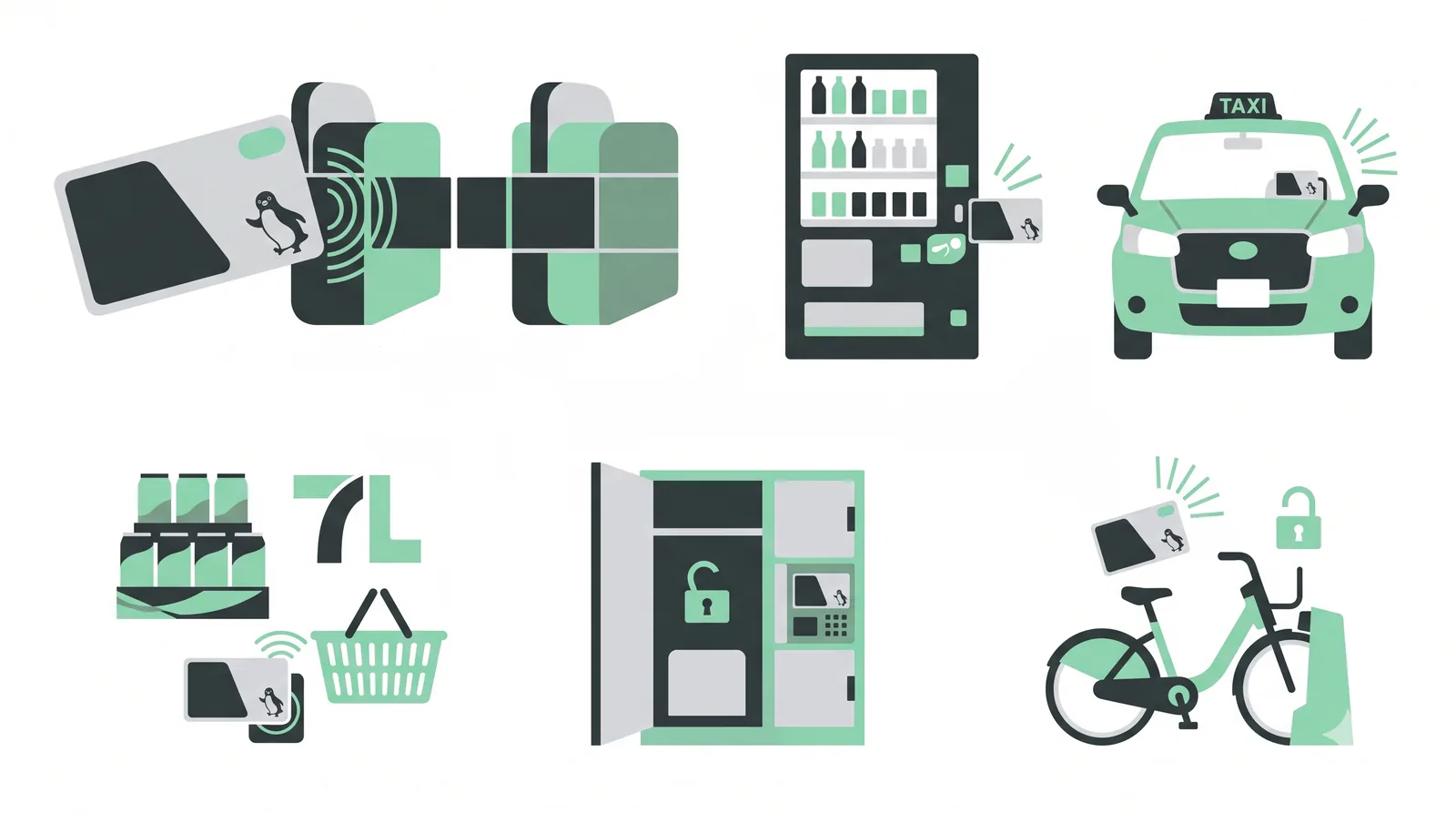
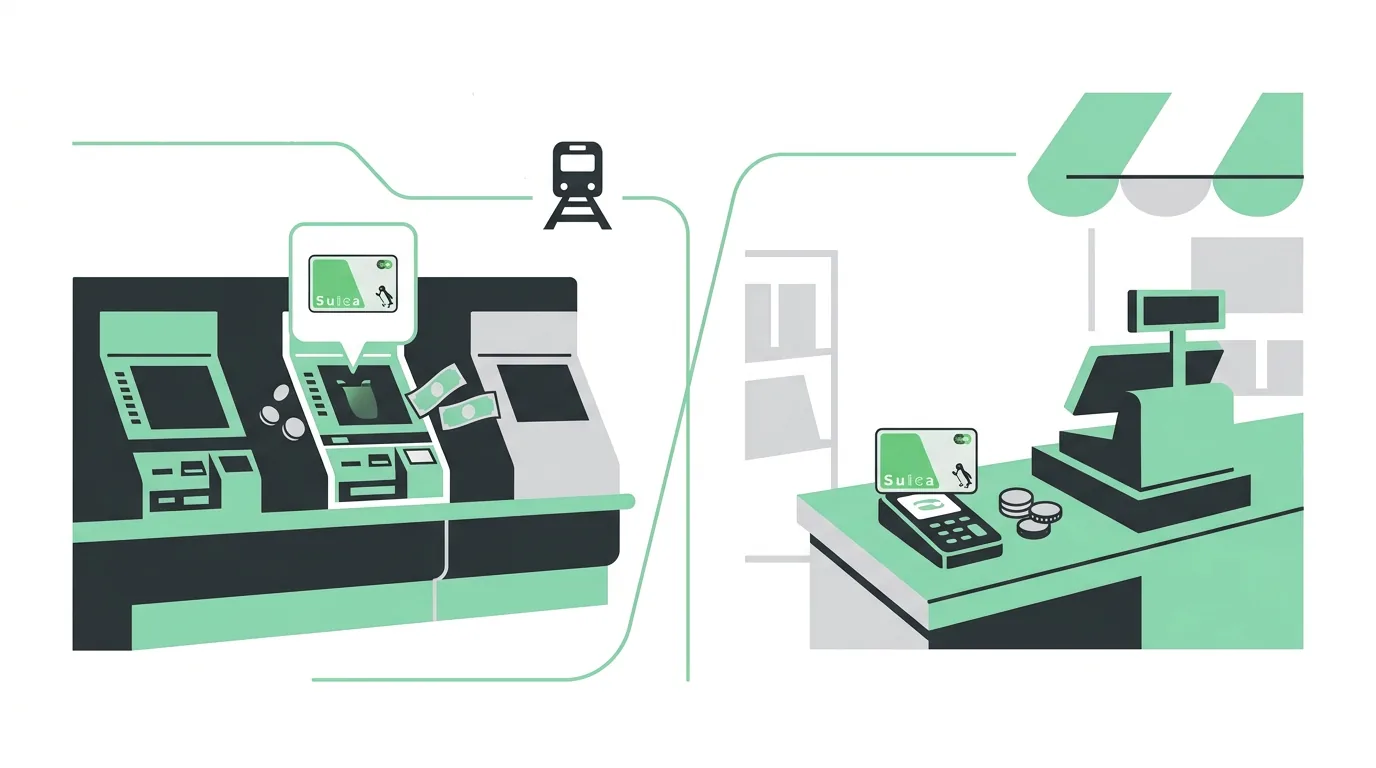
IC card being tapped at a train turnstile, with icons showing it also works at convenience stores, vending machines, and taxis
Why you need it

Your transit card does a lot more

No more queueing for tickets. Beyond every turnstile, your IC card works at convenience stores like 7-Eleven and Lawson, vending machines, taxis, fast food chains, drugstores, and karaoke bars. It also unlocks station lockers and rents you a city bicycle with a single tap, no passcode needed.

Suica and PASMO IC cards shown side by side
Which card to get

Suica or PASMO

Both work on every train, subway, bus, and at most shops. In practice, the difference is slim. Suica is easier to find at Narita and Haneda airports. If you have a compatible iPhone or Android, set up a digital Suica before you land and it is ready the moment you arrive.
Station ticket machine with English interface showing IC card top-up screen
How to charge it

Keep it topped up

Top up at any ticket machine in any station, all with an English option. Most machines accept cash and credit cards. You can also charge via the Suica or PASMO app. If your balance hits zero mid-journey, the fare adjustment machine near any exit handles it before you leave.
02

Use Google Maps

Google Maps knows the entire Tokyo network: platform numbers, fare prices, transfer times, and walking distances included. Here is how to get the most out of it.

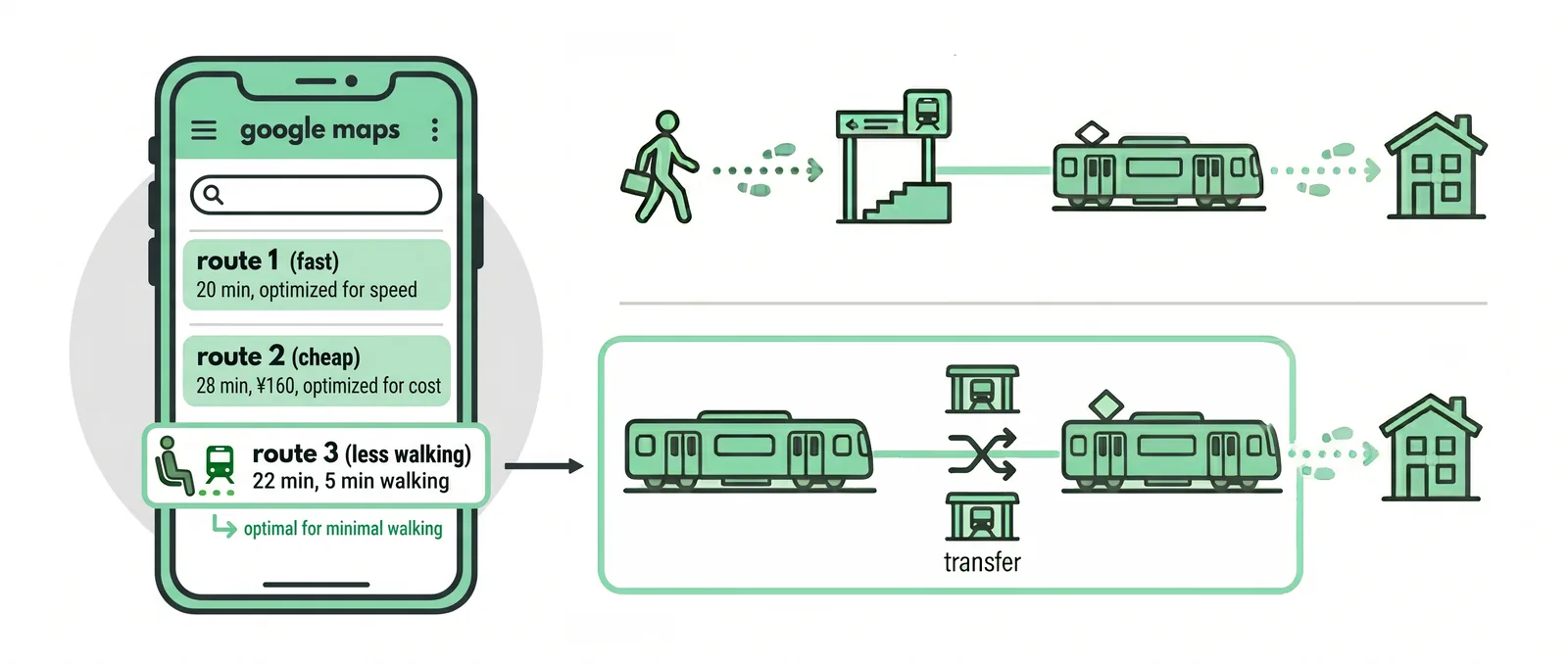
Google Maps showing multiple transit route options with journey time, transfers, and fare for each
Multiple routes

Every destination has options

Google Maps gives you 2 to 4 route options for most journeys. Do not just pick the first one. Compare total time, number of transfers, walking distance, and fare. The fastest route is not always the simplest, and in summer a long walk between stations is a real factor worth considering.

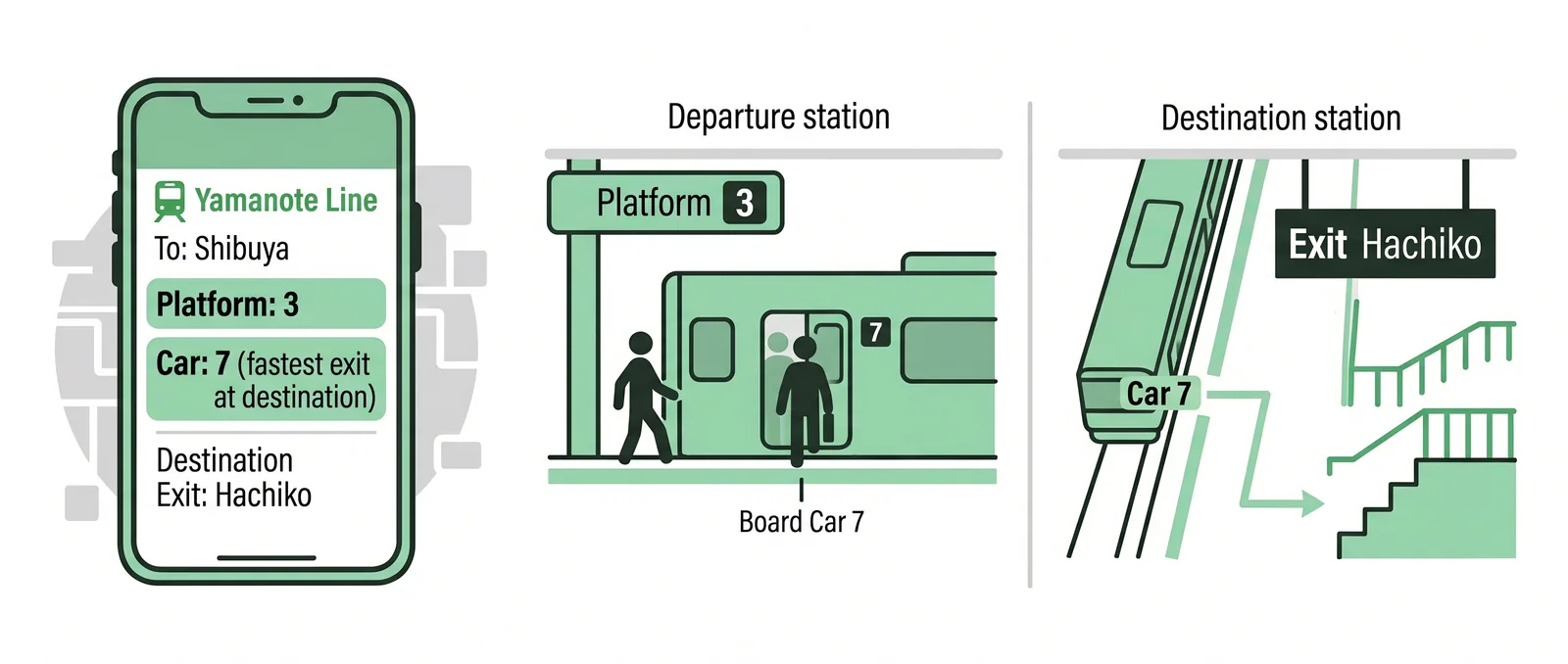
Google Maps transit directions expanded to show platform number, car boarding position, and step-by-step walking instructions
Reading the details

Platform numbers and car positions

Tap on any route for the full breakdown: which line, which direction, which platform, and how many minutes at each step. On many lines, Google Maps also shows car boarding positions, telling you which car to board for the fastest exit at your destination. Worth checking before a busy transfer.

03

Don't let transfers scare you off

Every Tokyo station has the same information, the same signs, and the same logic. Once you know what to look for, even Shinjuku makes sense.

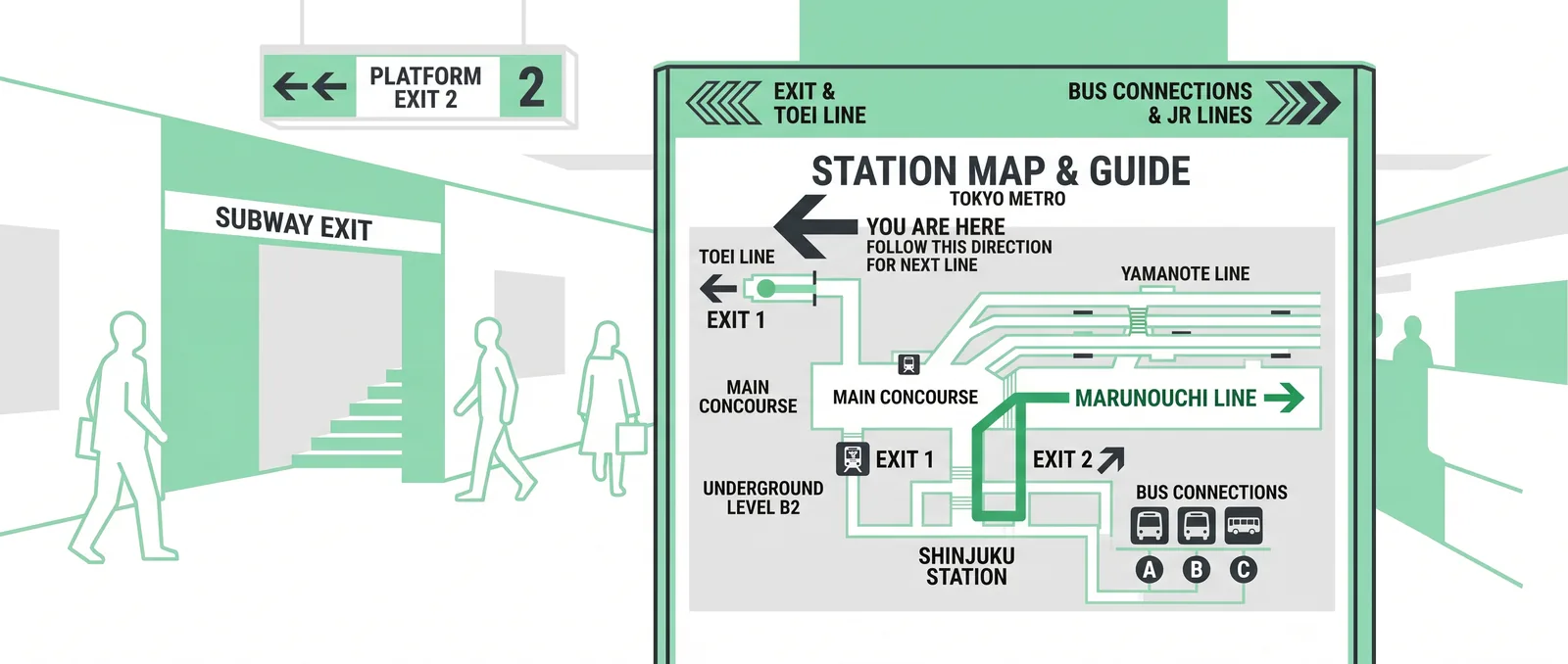
Platform signpost showing a station map with exits, connecting lines, and directional arrows labelled in English
Platform signpost

Every platform has one

As you exit the car, look for the platform signpost. It shows a map of the entire station with exits, connecting lines, and bus connections, all in English. It tells you which direction to walk to reach your next line or exit. Stations like Shinjuku are built to feel complex. The signpost is your anchor.

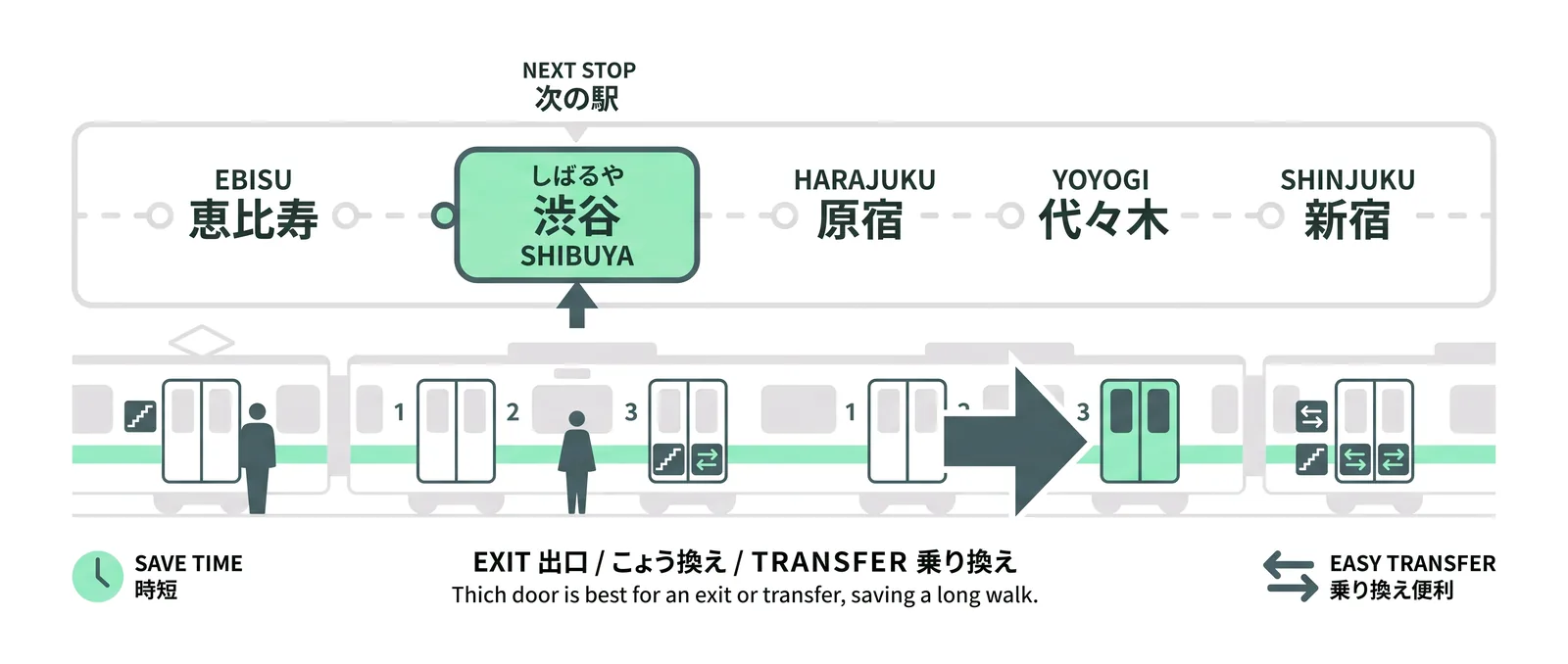
In-car overhead display showing station map with current stop highlighted and recommended door positions for the next exit
In-car screens

Check them before you exit

Most trains display a station map above the doors with your current stop highlighted and upcoming stops visible. Two stops before your destination, check the screen for car position recommendations. It shows which door opens closest to your exit or transfer, saving you a long walk at the other end.

04

Plan your exit beforehand

At your origin platform there is a map telling you exactly where to stand for the fastest exit. Most visitors never notice it. Use your waiting time well.

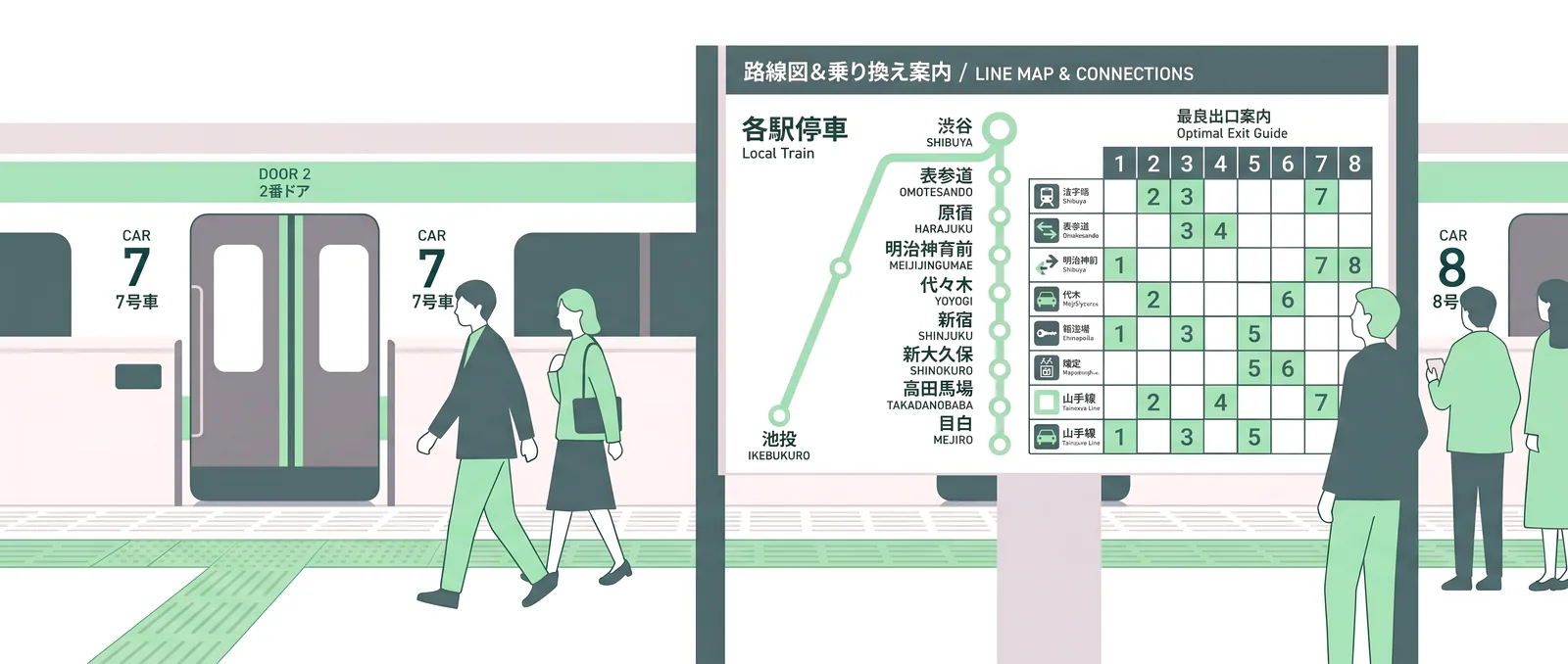
Platform map listing every station on the line with recommended car and door numbers for each exit and connecting line
The platform map

Get into position before the doors open

At either end of your origin platform, you will find a detailed map listing every station on the line with the recommended car and door for each exit or connecting line. Check it in the 30 seconds before your train arrives, board the right car, and step off exactly where you need to be.

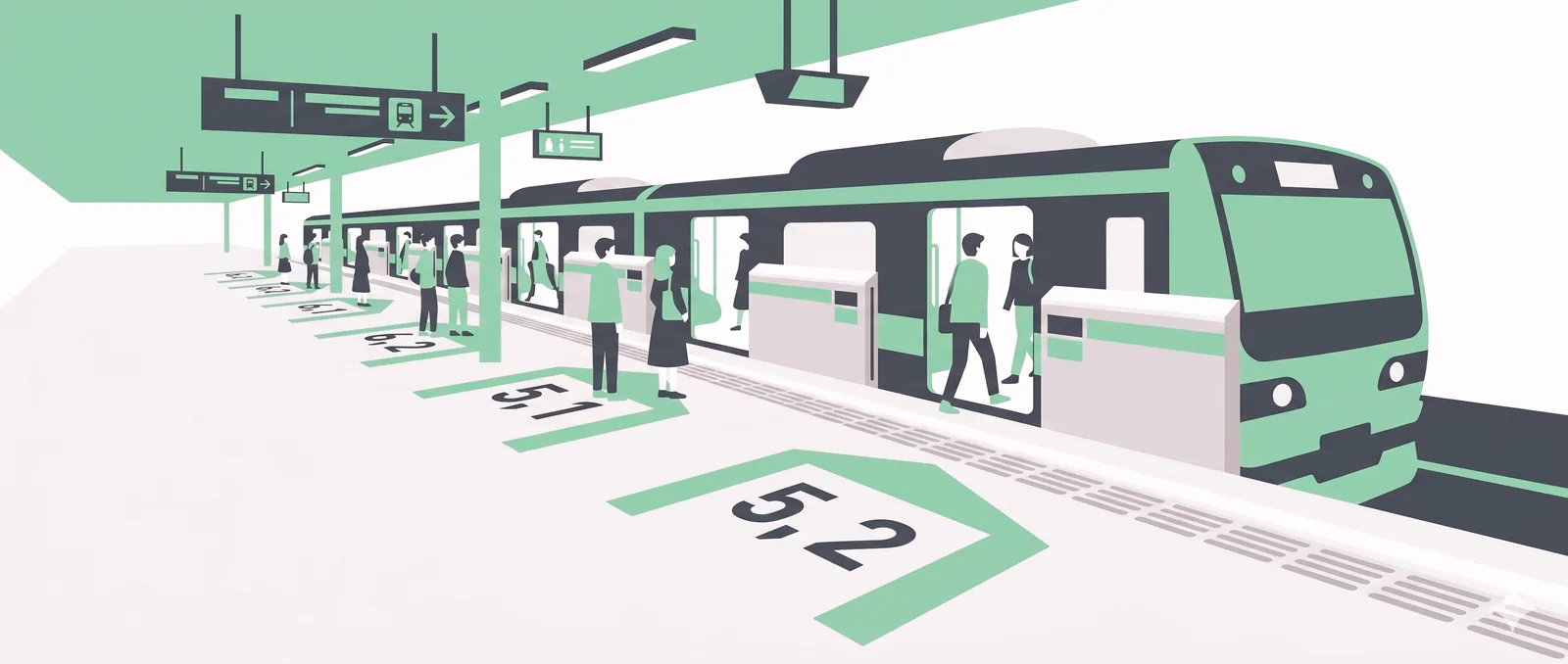
Platform floor boarding marks showing car number and door number printed next to each waiting position
Reading the numbers

Car first, door second

Next to each boarding mark on the platform floor, you will see two numbers. The first is the car number. The second is the door number within that car. Find the mark that matches your target, line up there, and the doors open directly in front of you when the train arrives.

05

Ride the buses too

The bus network covers gaps the subway does not reach. The rules are simple once you know them, and one rule is all you really need.

Passenger tapping an IC card at the front-door reader of a Tokyo Metropolitan bus, paying a flat fare on boarding
Metropolitan bus

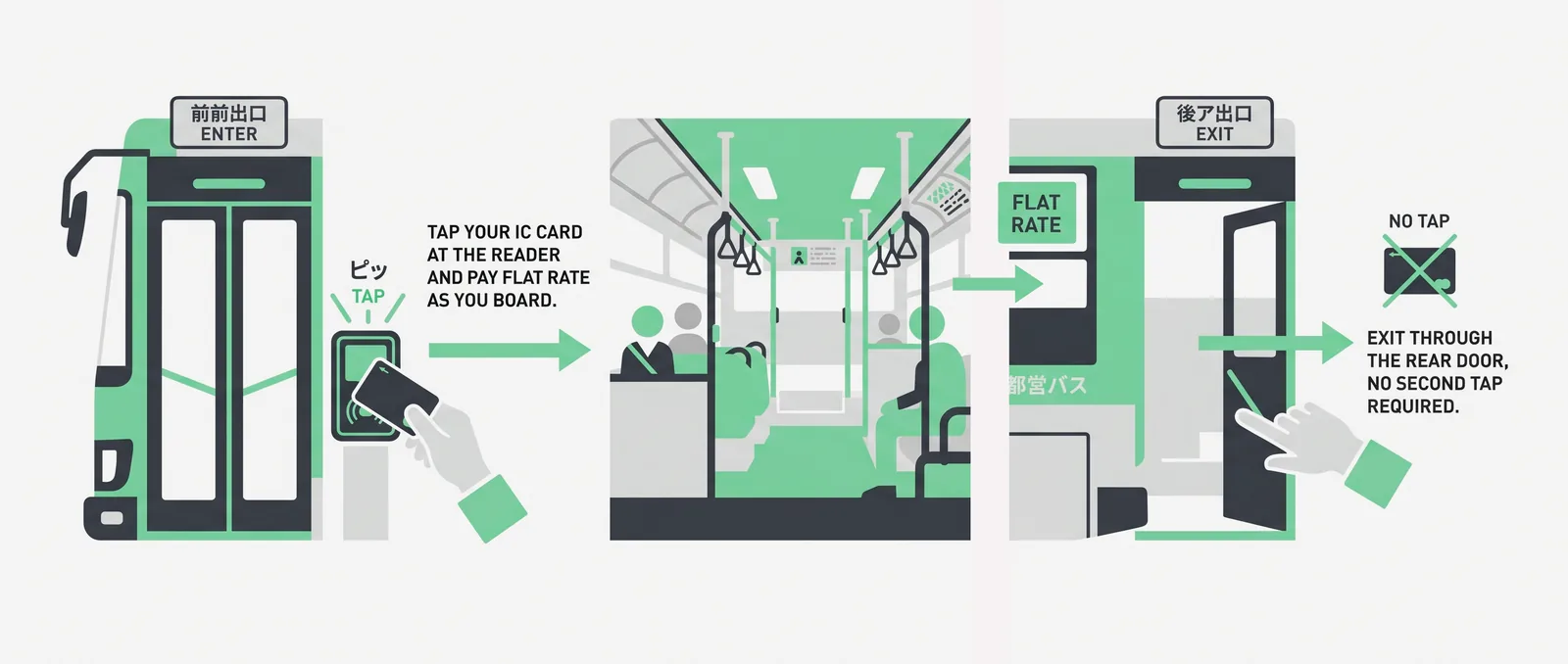
Enter through the front

You are on a Tokyo Metropolitan bus. Tap your IC card at the reader by the front door and pay a flat rate as you board. Exit through the rear door, no second tap required. If you are unsure which door to use, follow the passengers boarding around you.

Passenger boarding a JR bus through the rear door and tapping an IC card, with a reminder to tap again at the front on exit
JR bus

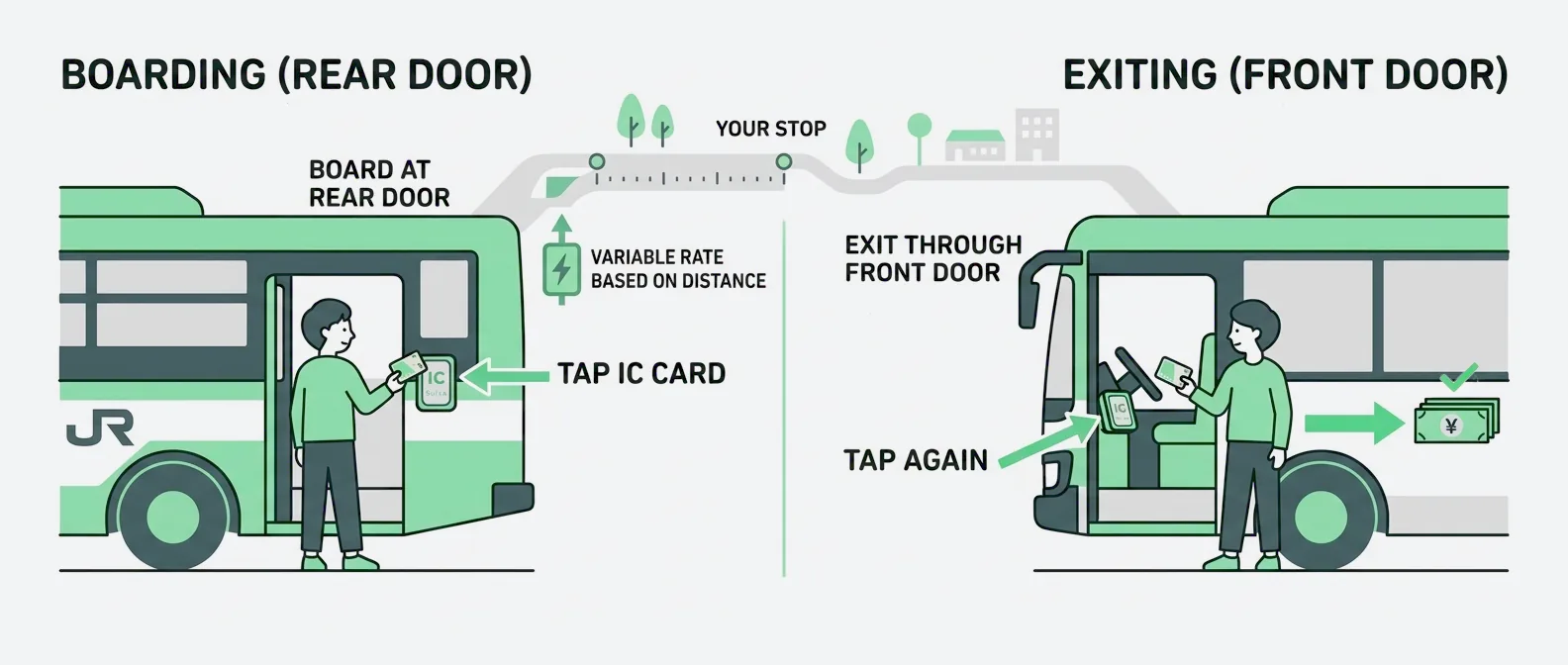
Board at the rear instead

On a JR bus line, the rear door opens first. Tap your IC card as you board and you are charged a variable rate based on distance. When you reach your stop, exit through the front door and tap again. Miss that exit tap and you will be charged the maximum fare.

Person standing directly beside a Tokyo bus stop sign as a bus pulls up, with the correct door stopping in front of them
Bus stop

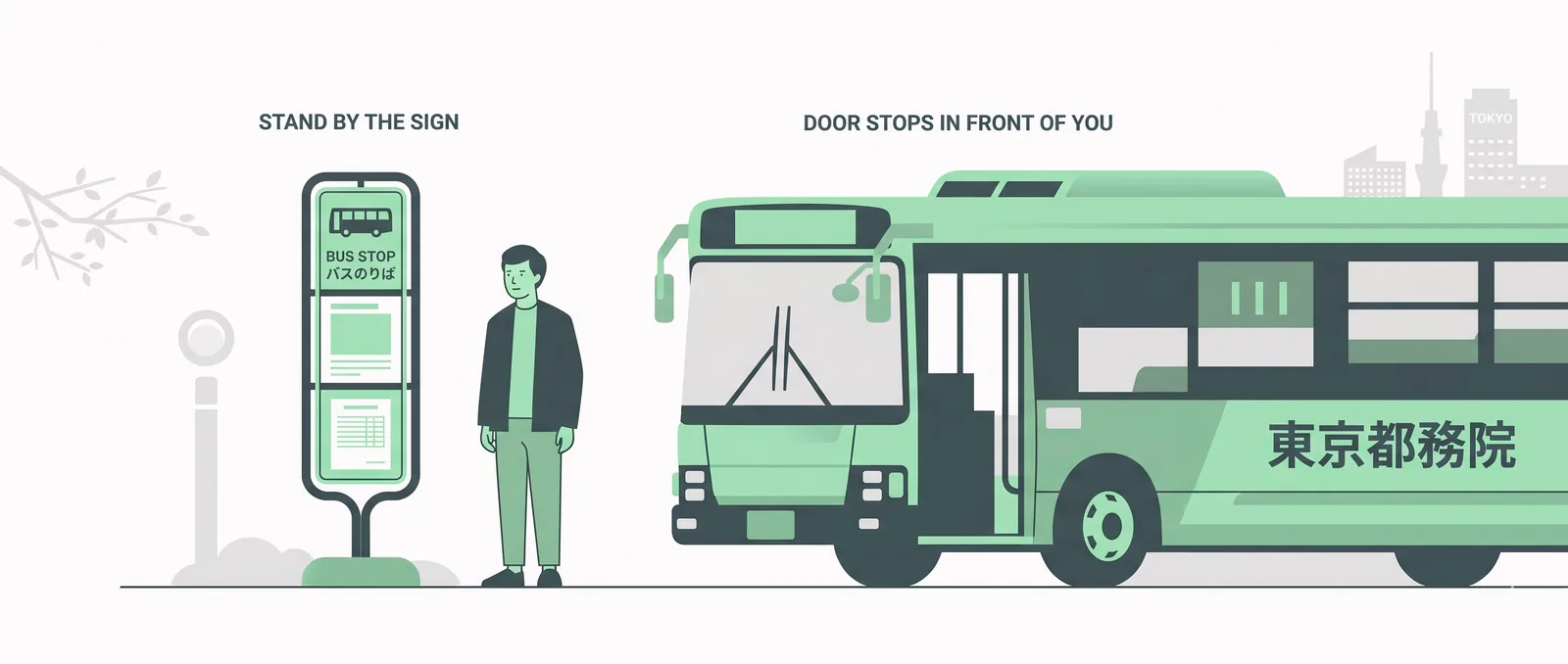
Stand by the sign

If you are the only one waiting, position yourself right next to the bus stop sign. Drivers in Tokyo are precise. The correct door stops directly in front of you. This also tells you immediately whether it is a front-door or rear-door bus, no guessing needed.

Questions

Things people
always ask.

Five quick answers to the transit questions that come up every time.

Do trains run through the night?

Most subway and JR lines stop running between midnight and 1am and resume around 5am. Last train times are posted at every station entrance and visible on Google Maps. If you miss the last train, taxis are easy to find or you can wait at a manga cafe until the first service. Worth planning around on weekends.

Can I bring a large suitcase?

Yes. There are no restrictions, but larger bags should go in the overhead rack or near the door area, not in the aisle. The busiest rush hour times are roughly 7 to 9am and 6 to 8pm, and those are worth avoiding with heavy luggage. For airport transfers, limited express services like the Narita Express have dedicated luggage space.

Are stations accessible for wheelchairs and strollers?

Most major stations have elevators, but not all exits at every station do. Google Maps lets you filter for wheelchair-accessible routes when planning a journey. Station staff can also assist, and most platforms have call buttons. It helps to identify the accessible exit in advance for larger stations.

What is the etiquette on trains?

Keep your voice low and phone calls off. Eating is generally fine on long-distance trains but not on local subway lines. Priority seats near the doors are for elderly, pregnant, and injured passengers. Queuing on the platform markings is standard and always observed. Headphones are expected if you are listening to anything.

What happens if I tap out at the wrong exit?

You can tap out at any gate at your destination station without being charged extra, as long as you stay within the paid area. If you accidentally exit and re-enter, you will be charged a second fare. The fare adjustment machine near any exit gate handles underpayments before you leave, and station staff are always happy to help.

Also available
Want the logistics figured out for you?

A custom itinerary from The Tokyo Life includes day-by-day routing, transport guidance, and a Google Maps list ready for your phone, so you can move through Tokyo without thinking about it.

Plan my trip →